Valved vs. Non-Valved Masks: Which One Should You Choose?
Release time: 2026-08-07
One of the most common questions we hear from buyers: Should I choose masks with an exhalation valve or without?
Some say valved masks are more comfortable. Others insist non-valved are safer.
Both are right—but incomplete. The answer isn’t about which is “better.” It’s about which fits your specific use case.
Let’s break it down so you can make the right call.
What Exactly Is an Exhalation Valve?
Think of the valve as a one‑way door.
- When you inhale – the valve closes. Air passes through the filter media, and filtration efficiency remains unaffected.
- When you exhale – the valve opens. Warm, moist breath exits directly through the valve, bypassing the filter material entirely.
In simple terms: with a non‑valved mask, your breath has to push through the filter media, creating resistance. With a valved mask, hot air takes a “shortcut” out through the valve. That difference in breathing resistance is the core physical distinction between the two.
Valved Masks: Pros and Cons
✅ Advantages
Significantly lower exhalation resistance. A properly designed valved mask can reduce exhalation resistance by about 40%. Hot, humid air escapes quickly, preventing heat and moisture from building up inside.
More comfortable for long‑duration wear. Especially in hot, humid, or physically demanding environments. The U.S. CDC notes that valved respirators can improve wearer comfort during high‑intensity work, making them easier to wear for extended shifts.
Less fogging on eyewear. Exhaled air exits through the valve rather than leaking upward from the nose bridge, so safety goggles and prescription glasses stay clear.
⚠️ Limitations
Protects only the wearer, not those around them. A valved mask is one‑way protection – exhaled air is released directly into the environment without being filtered. If the wearer is carrying an infection, pathogen‑laden droplets can escape through the valve.
Not suitable for medical or high‑risk infection settings. China’s medical protective mask standard GB19083‑2023 explicitly states that “disposable medical protective masks shall not be equipped with exhalation valves.” The CDC also advises against using valved respirators in certain healthcare settings like operating rooms.
Non‑Valved Masks: Pros and Cons
✅ Advantages
Two‑way protection. Both inhalation and exhalation pass through the filter media. This protects both the wearer and the people around them. Studies show that non‑valved N95 masks can block up to 98% of exhaled particles.
Required for medical and high‑risk environments. Hospitals, clinics, isolation areas – these settings rely on non‑valved masks as standard.
Generally lower cost. Fewer components (no valve) means a more affordable unit price.
⚠️ Limitations
Higher exhalation resistance. Warm air must “force” its way through the filter material, making the mask feel hotter and more stuffy.
Less comfortable over long periods. Moisture and heat accumulate inside the mask, especially in warm environments or during physical labour.
Increased fogging on glasses. Moisture escapes through the top edge, which often leads to fogged lenses.
Quick Selection Guide – By Scenario
Mining, construction, cutting/grinding → Valved – Dusty environments, long shifts – comfort is a priority.
Hospitals, clinics, operating rooms → Non‑valved – Two‑way protection is mandatory to protect patients.
Factory workshops, welding, foundries → Valved – High heat and humidity, extended wear.
Pharmacies, retail, public spaces → Non‑valved – You need to protect the people around you.
Laboratories, pharmaceutical manufacturing → Non‑valved – Aseptic environments demand no unfiltered exhalation.
Daily outdoor use (smog, pollution) → Valved – One‑way protection is sufficient, and comfort matters.
Flu season / infectious disease outbreaks → Non‑valved – Prevent asymptomatic spread to others.
Individuals with weaker cardiopulmonary function → Valved – Lower exhalation resistance makes breathing easier.
One Point Often Overlooked
It’s important to note: filtration ratings like FFP2, FFP3, and N95 apply only to the inhalation direction on valved masks. That means a valved FFP2 mask does achieve ≥94% filtration when you breathe in – but the air you breathe out through the valve is not filtered at all.
That’s why in situations requiring source control – preventing the wearer from spreading infection to others – non‑valved masks are essential.
Recommendations for Buyers
If you’re in industrial, construction, or mining – valved FFP2/FFP3 respirators are a top choice. They maintain high filtration efficiency while offering real comfort, which means workers are more likely to keep them on – and that’s when protection actually works.
If you’re in healthcare, pharmaceuticals, retail, or public services – non‑valved masks are the safer option. They provide two‑way protection, safeguarding everyone.
Not sure which way to go? Many of our clients carry both – valved for their shop floor workers (comfort first), non‑valved for offices and public areas (protection first).
How We Can Help
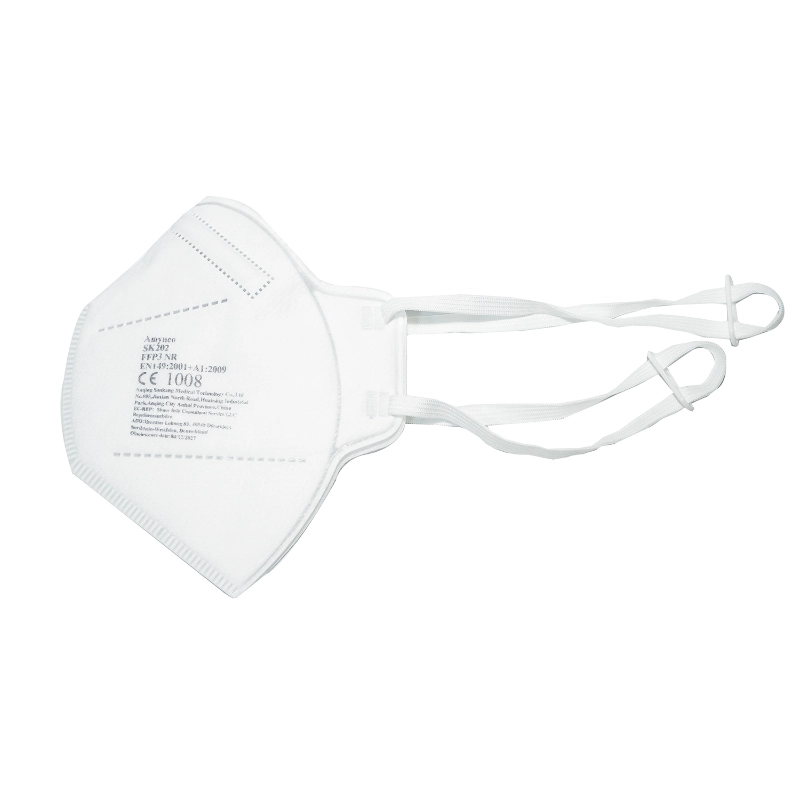
We supply FFP2 and FFP3 masks – both valved and non‑valved – fully compliant with EN 149:2001+A1:2009. All batches come with CE certification and full traceability.
No minimum pressure. Just real products, real certificates, and real communication.
📞 Tel/WhatsApp: +86 153 5795 3209
📧 Email: manager@aqsankang.com
https://www.aqsankang.com/category/products/by-standard/ffp1-ffp2-ffp3-series-by-standard